
In Fairfax County, Virginia, the answer is a resounding “Yes!” From tiny worm snakes to big rat snakes, Fairfax County is home to a variety of snakes, but our only native venomous snake is the copperhead. To see a rattlesnake, you’ll have to go west at least to Loudoun County. Looking for a cottonmouth? You’ll have to go to southeastern Virginia. Let’s take a look at some of our slithering neighbors that you’re likely to meet on the trail.
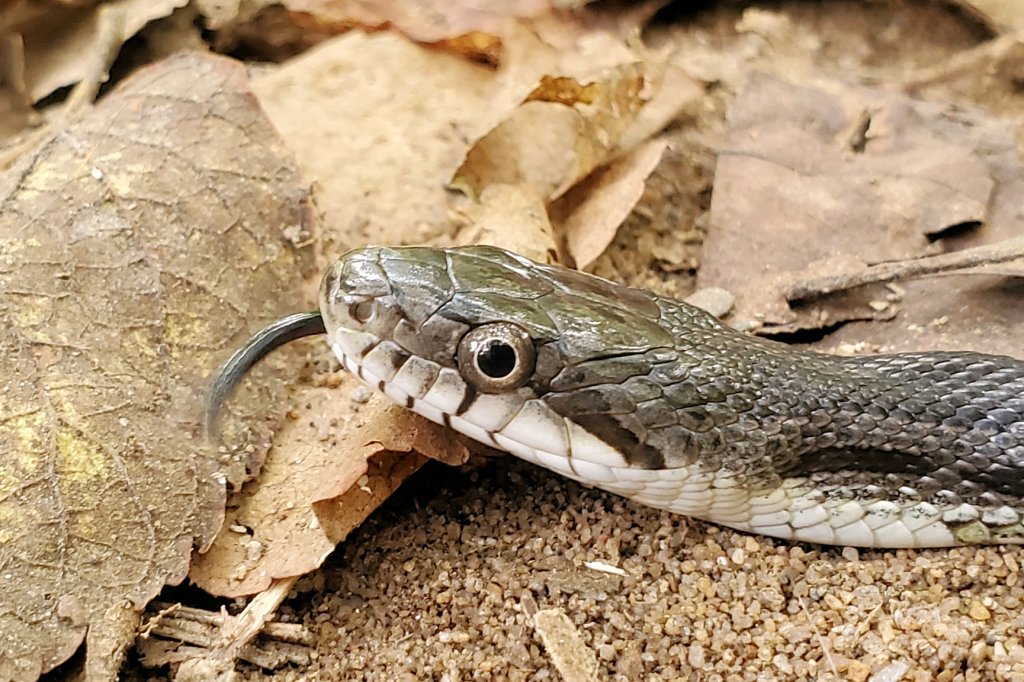
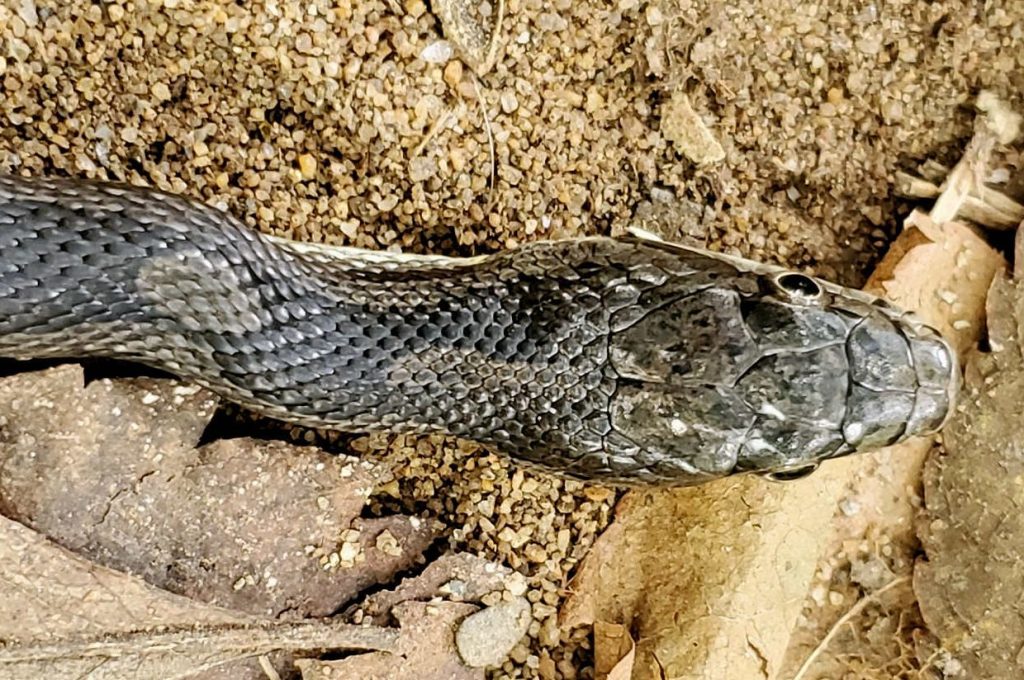
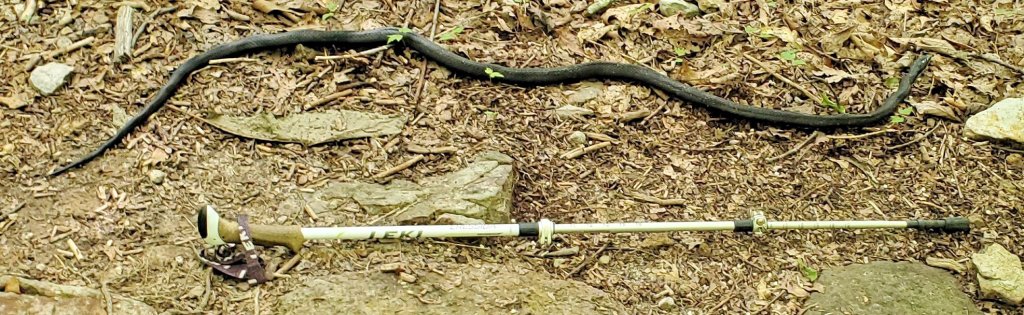
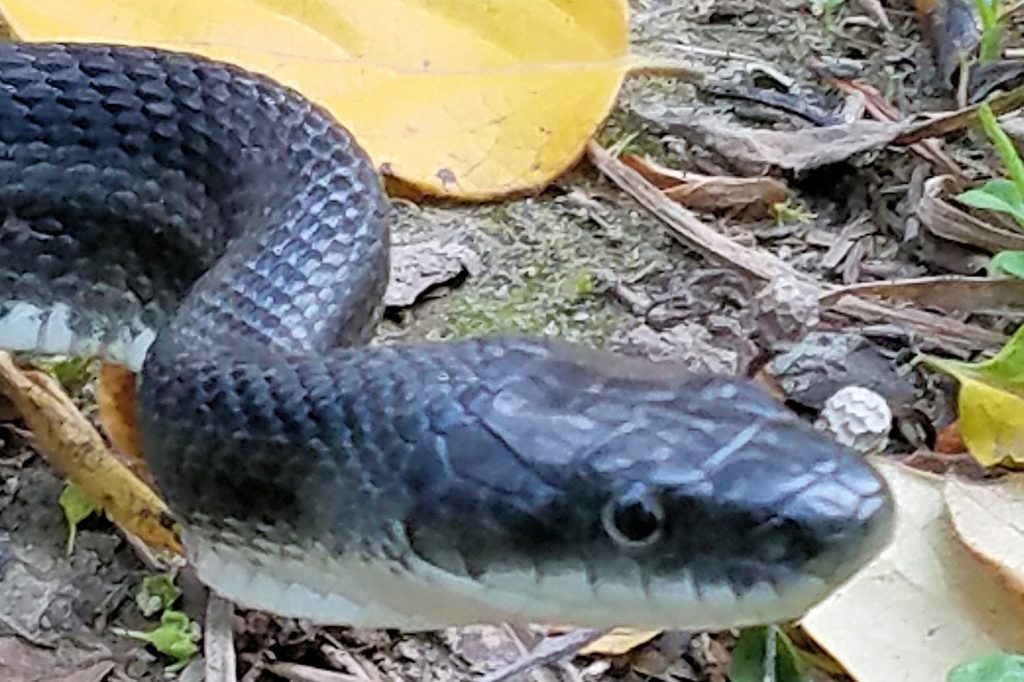
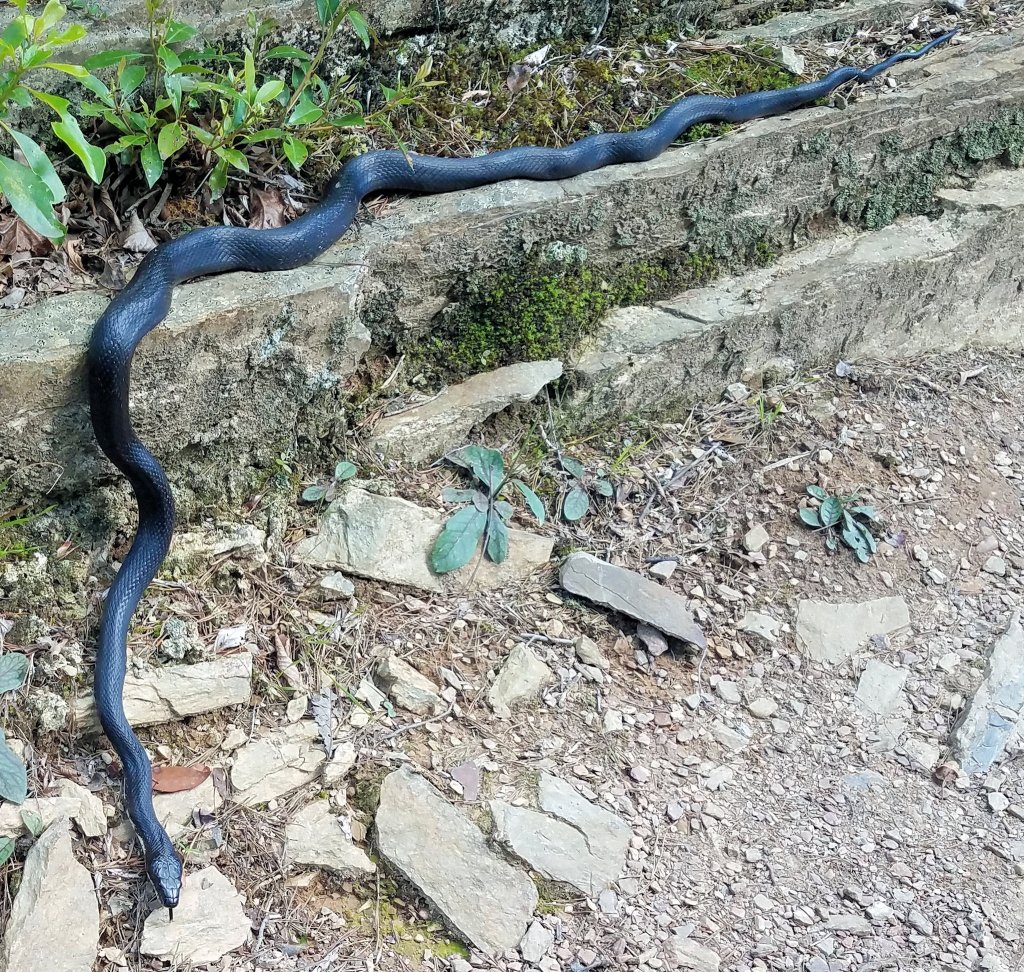
Rat snakes are among the snakes you are most likely to see, both due to their activity and size. They can climb trees, and they can have a kinked appearance when stressed. Colors and patterns vary, and the taxonomy can get wonky, but in Northern Virginia you’re most likely to encounter Pantherophis alleghaniensis with a black body and a white belly. Five-foot adults are common, and the ones I’ve seen have been surprisingly happy to pose for pictures. In the photos below, you can see a faint pattern on one snake that I observed in Maryland, while the others are the more typical black and white.
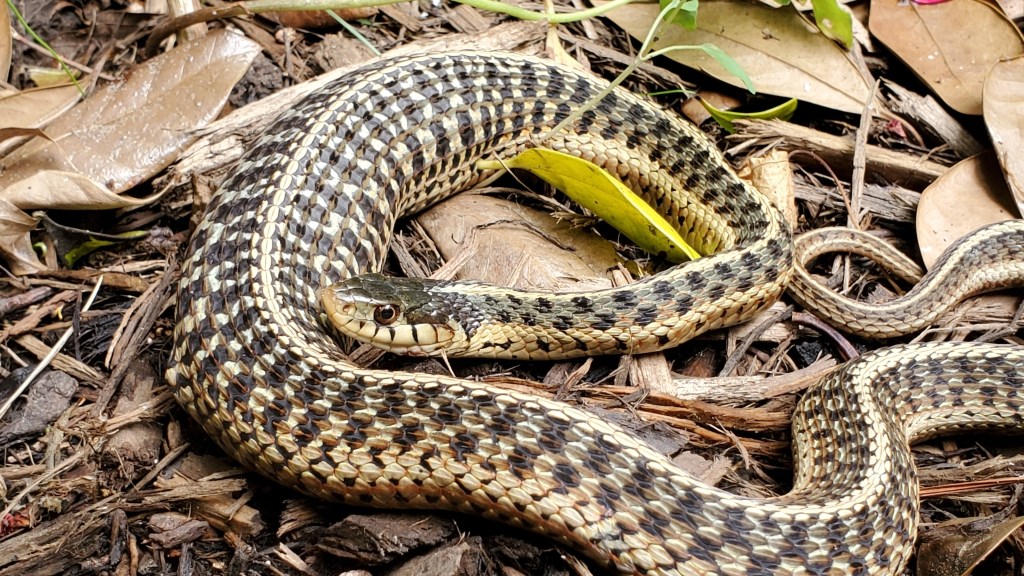
Garter snakes are another common snake with variable colors and patterns. In our area, the common subspecies is the eastern garter snake, Thamnophis sirtalis sirtalis. The fat specimen below had been feasting on cicadas in my backyard during the brood X emergence in 2021.
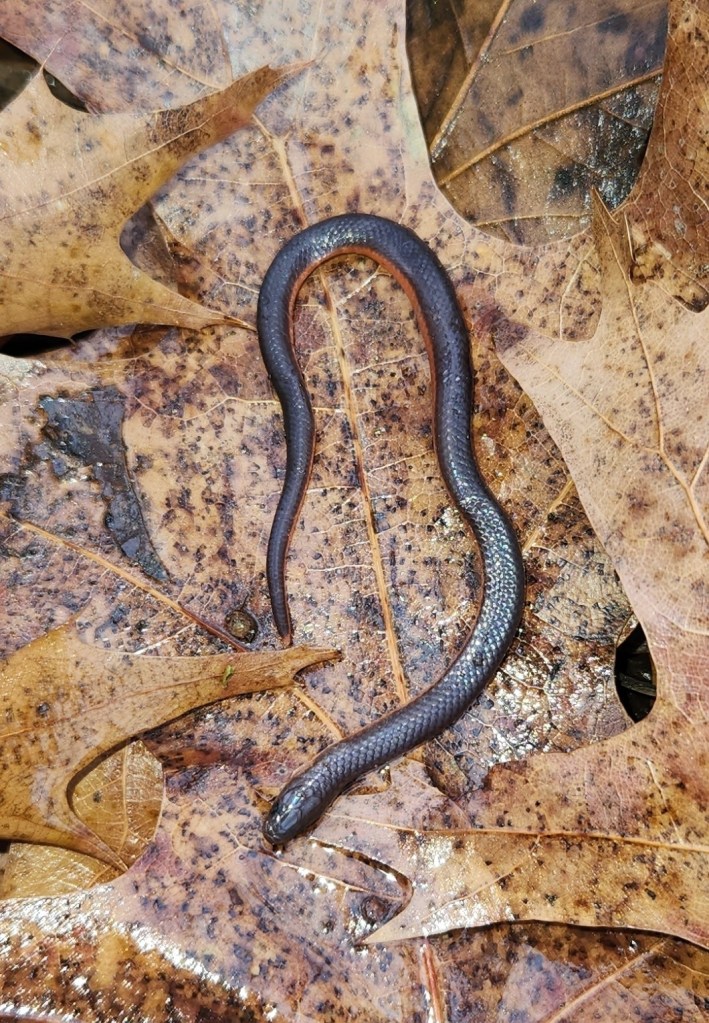
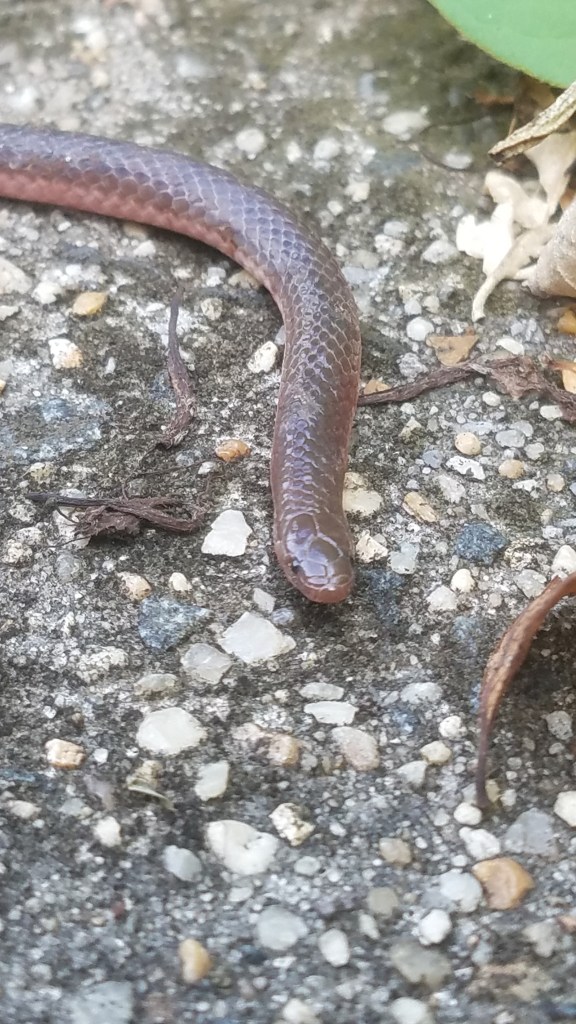
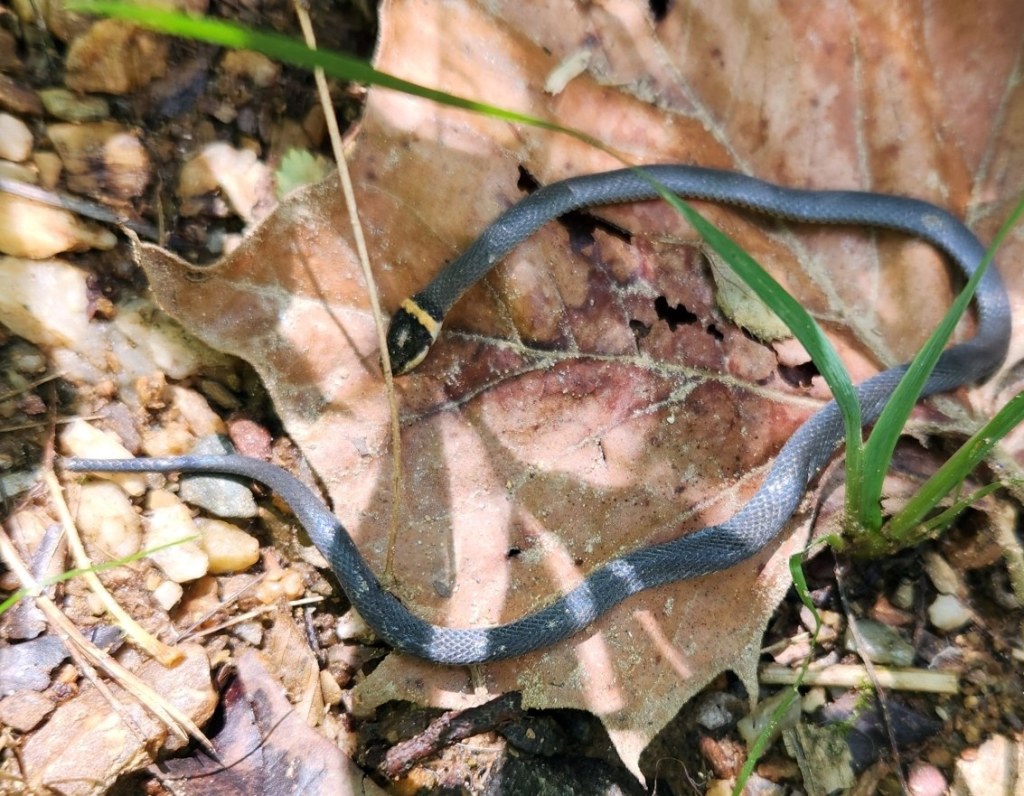
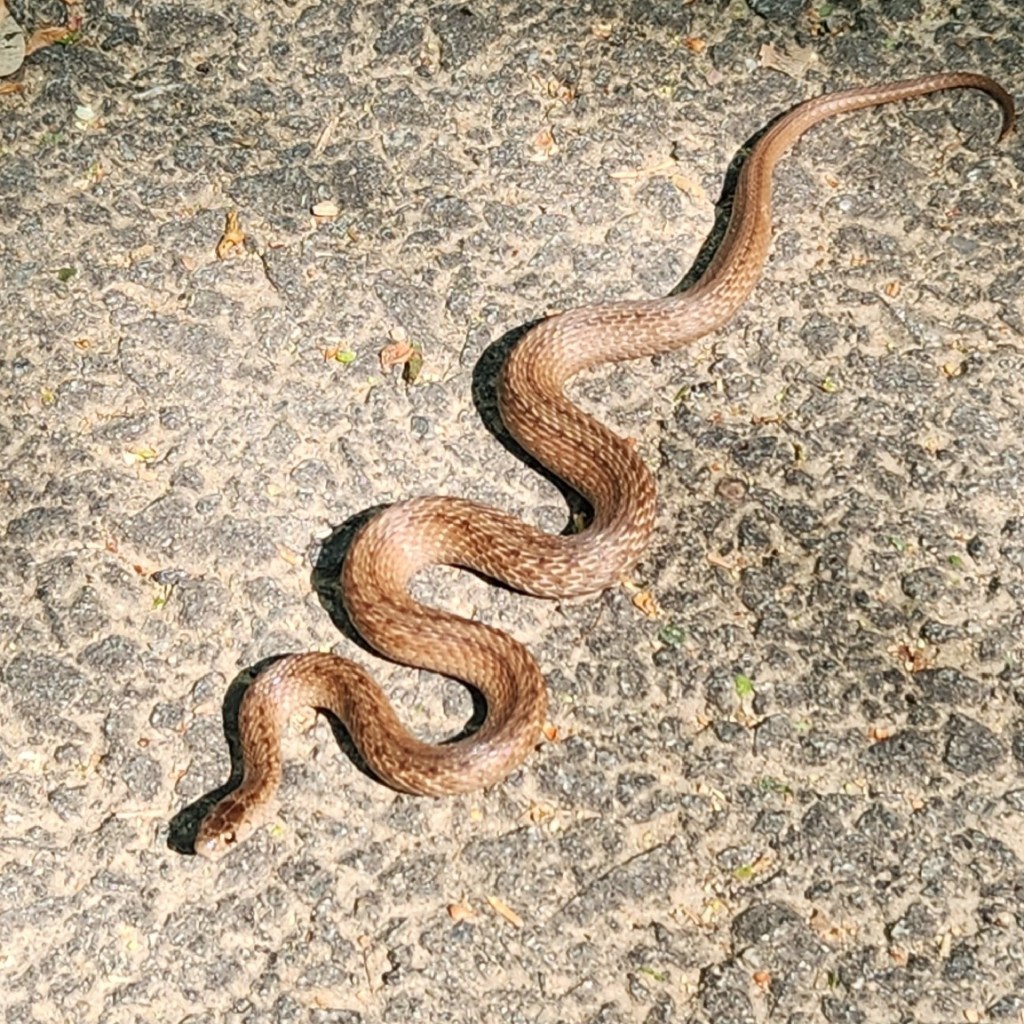
Among the smaller snakes in our area, the worm snake measures only about 7.5–11 inches long and is typically found in wooded areas. It usually has a dark back and a pink belly. The slightly larger ring-necked snake is easily distinguished from worm snake because it has … wait for it … a ring on its neck! DeKay’s brownsnake is another small species, with a handsome pattern that resembles a small garter snake.
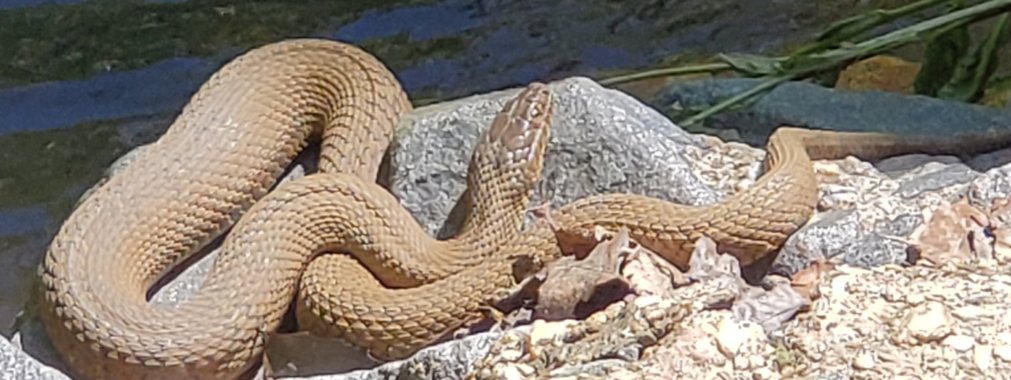
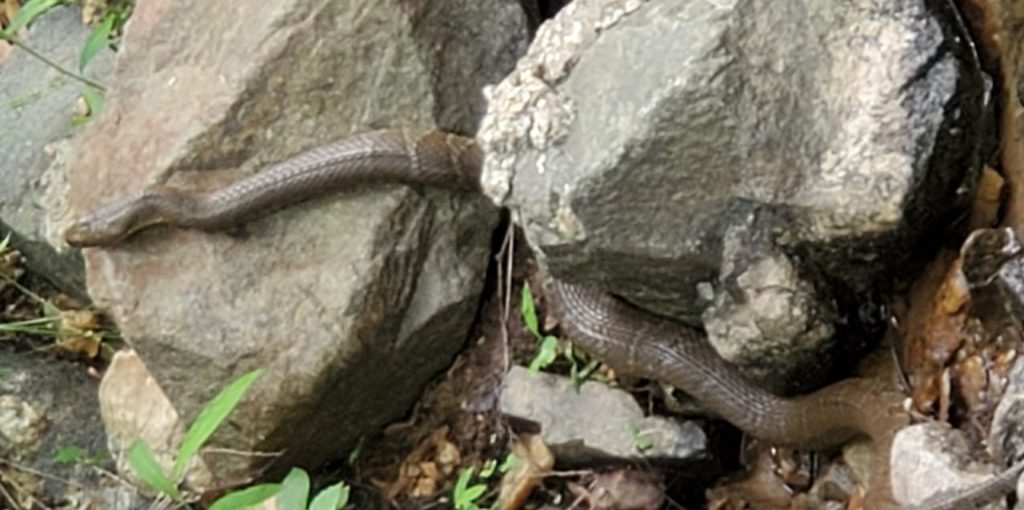
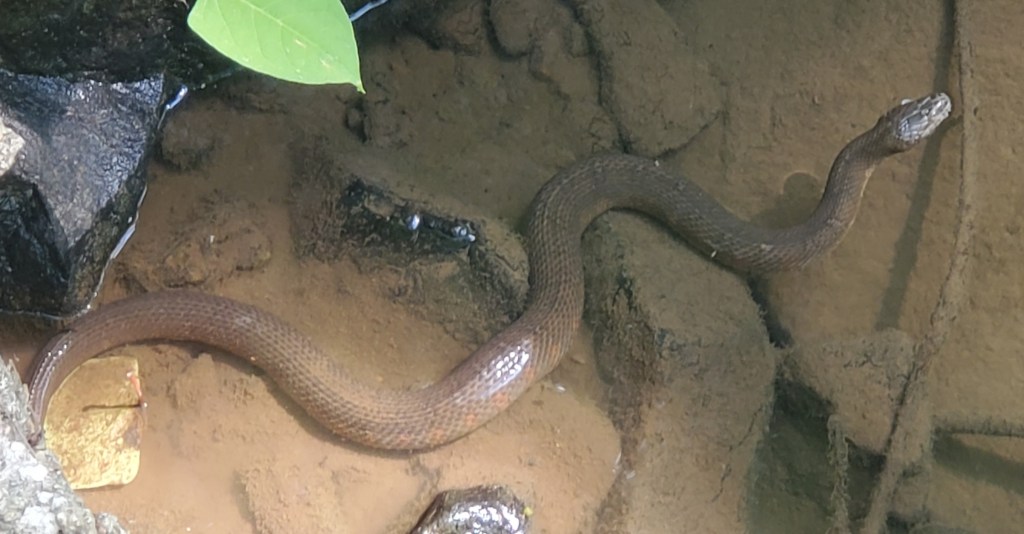
Of course everyone wants to talk about venomous snakes. Let me repeat: the only venomous snake native to Fairfax County is the copperhead. Those big dark snakes by the creek or the Potomac River are Northern Water Snakes – not cottonmouths. And in the hundreds of hours I have spent on the trails and doing habitat restoration in Fairfax County, I have seen a total of exactly zero copperheads. That said, I am always alert, but I’m not afraid.
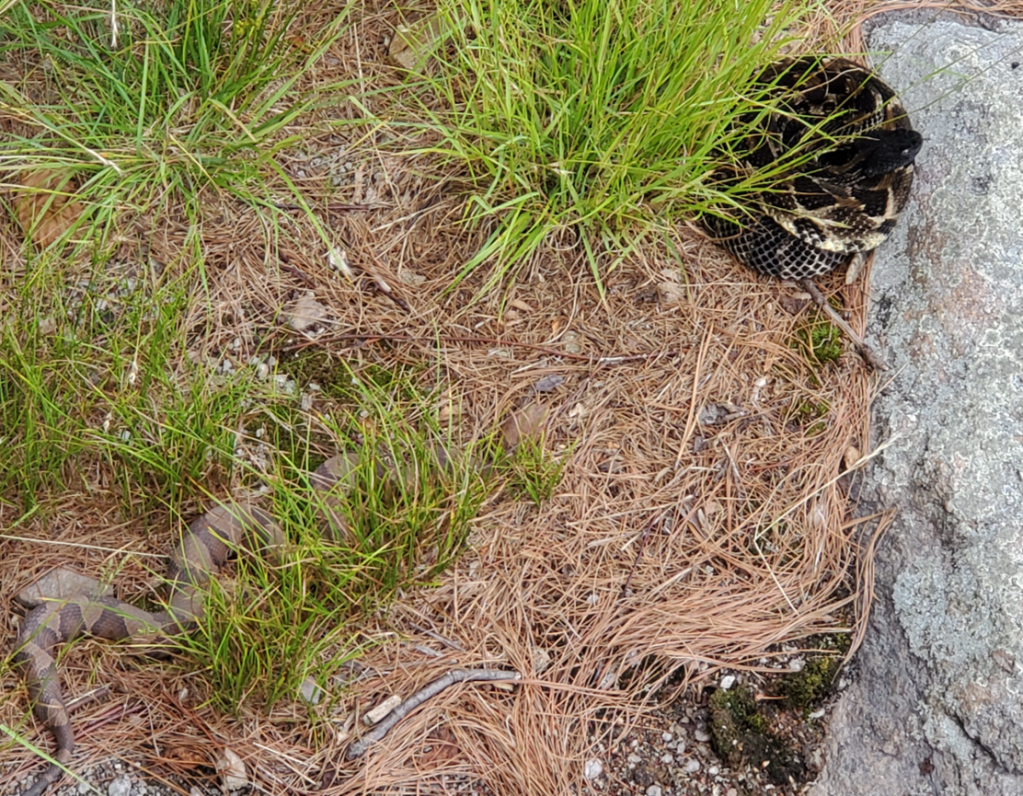
When I hike, I keep my eyes open. Timber rattlesnakes are intimidating and genuinely scary, but I actually worry more about copperheads because they blend in so well with their surroundings and are almost impossible to spot. I always poke ahead with my poles to scare away any snakes when going off trail. Over the whole length of the Appalachian Trail, I saw a total of five venomous snakes. Remarkably, three of them were at the same overlook, and the others were the day before. The picture below from that overlook clearly shows how much easier it is to see timber rattlesnakes than copperheads.
A piece of advice if you prefer to admire our snake friends out on the trails instead of in your backyard: mice are attracted to spilled seed from bird feeders, and snakes are attracted to mice.
But do get to know our local snakes and respect the role they play in our ecosystem. Every time a snake eats a mouse, that’s one less mouse feeding ticks that can carry disease – and that alone is reason enough to appreciate these reptilian neighbors.


Leave a Reply